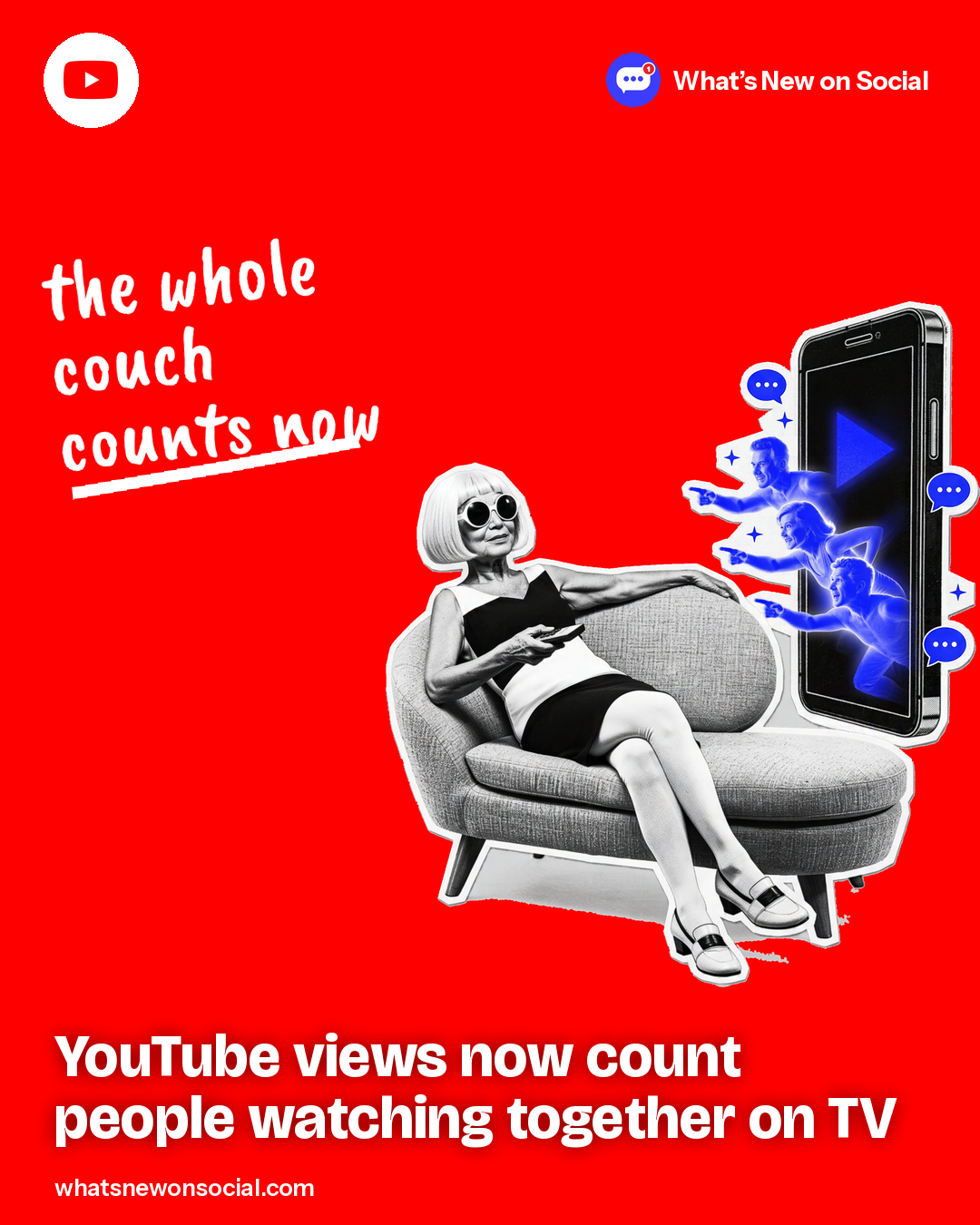
TL;DR YouTube’s public view counts now add estimated viewers watching together on TV, but your Partner Program earnings and eligibility stay the same.
● Rolling out
Who gets it: public view counts, from Nov 2026
Beginning November 2026, YouTube’s public view counts on watch pages include co-views: an estimate of how many people are watching together on a TV screen. Watch time and live concurrent viewers include co-views too. Engaged views and unique viewers don’t.
YouTube says Partner Program earnings still run on engaged views and engaged watch hours, and eligibility on qualified views and watch hours. To see the difference, YouTube Insights has a new Co-view rate: divide your total views by it to get your baseline without co-viewers. The separate Views (Co-viewed) metric stays in Advanced Mode until May 2027.
What it means for your next post
- Check your Co-view rate before comparing this month’s views with last month’s.
- Send brand partners engaged views or baseline views, not just the public count.
- If your audience watches on TV, track watch time on longer videos, since it now includes co-views too.
Do this today
Open YouTube Insights, find the Co-view rate on your top video and write down its baseline views.
Quick answers
Does YouTube count people watching together on TV as views?
Yes. Beginning November 2026, public view counts on watch pages include an estimate of the individual viewers watching together on TV screens.
Do YouTube co-views change my earnings?
No. YouTube says the update won’t affect Partner Program earnings or eligibility, which still use engaged views and engaged watch hours, and qualified views and watch hours.
How do I see my YouTube views without co-viewers?
Use the Co-view rate in YouTube Insights: divide your total views by it to get your baseline views without co-viewers.
Related on What’s New on Social
Source: YouTube Help, Understand your YouTube content performance, November 2026